Source Collator Ready Black and White Printer for Retail, Logistics, and Office
Find a collator ready black and white printer from 30 verified listings. Compare thermal printing speeds, resolution options, and interface types to select the right device for label making, barcode scanning, and point-of-sale operations; compare the available evidence and request quotations based on your requirements.
Key considerations
Products List




Comprehensive Sourcing Guide
Collator Ready Black and White Printer Sourcing Guide
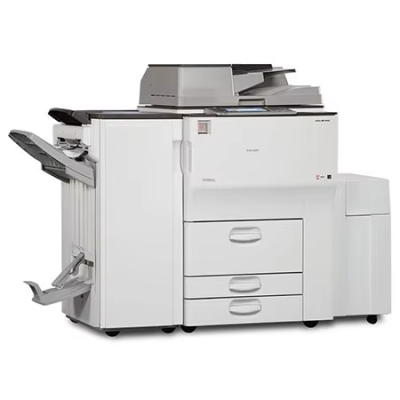
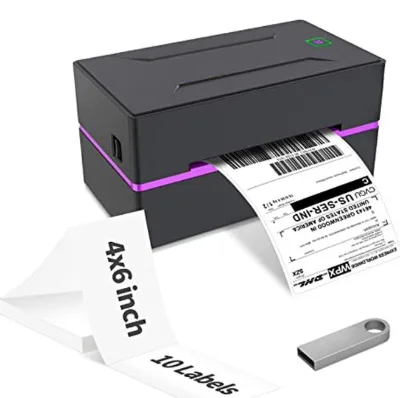
Procuring a collator-ready black and white printer requires distinguishing between high-speed industrial label makers and compact portable units designed for specific barcode applications. The market presents a wide spectrum of devices, ranging from 70mm/s to 120mm/s print speeds, with varying paper capacities and connectivity options. Buyers must carefully evaluate whether the device supports the specific command sets, such as POS or ESC, required by their existing inventory management software.
The observed product landscape includes models originating from Japan and Fujian, China, indicating diverse manufacturing origins that influence supply chain reliability. While some units feature rechargeable lithium batteries for mobility, others are designed for fixed on-line operations with automatic paper feeding. Understanding these operational differences is critical before selecting a supplier, as the intended usage environment dictates the necessary durability and interface requirements for a successful deployment.
Product Scope and Observed Listing Signals
The current market listings reveal a significant price variance, with observed costs ranging from approximately 19.5 USD to 120,000 USD, reflecting the disparity between basic thermal units and complex industrial systems. This wide range suggests that buyers must scrutinize the specific model numbers, such as the R MP6002 or POS-8610, to ensure they are comparing equivalent tiers of performance and capability rather than disparate product categories.
Listing signals also indicate a mix of single-item selling units with varying minimum order quantities, typically between one and forty units. Some products are explicitly marketed as barcode printers with black and white styling, while others are classified as high-resolution ink jet printers using a drop-on-demand principle. Buyers should verify the exact application classification, such as label making versus general document printing, to avoid purchasing a device that lacks the necessary throughput or resolution for their specific workflow.
Technical Specifications to Verify
When evaluating technical performance, the print speed and resolution are primary decision factors, with observed speeds ranging from 70 to 120mm per second and resolutions up to 1200 DPI or 203 dots per line. Buyers must confirm the maximum paper size, which is frequently listed as 80mm, and ensure the effective print width aligns with their labeling requirements, typically supporting widths between 20mm and 80mm.
Connectivity and power specifications also require rigorous verification, as some models support USB and Bluetooth interfaces while others lack network functionality entirely. The power adapter requirements vary, with some units needing 7.4VDC at 2000mA, and battery life depends on the inclusion of rechargeable lithium batteries. Additionally, the physical dimensions and gross weight, ranging from 0.35kg to 2.000kg, must be checked to ensure compatibility with the intended installation space and transport logistics.
Compliance and Safety Documentation
Safety and compliance documentation for these devices often centers on electrical standards and material safety, particularly regarding the power adapters and battery systems used in portable models. Buyers should request evidence that the power supply components meet the voltage and current specifications listed, such as 7.4VDC, to prevent equipment damage or safety hazards during operation.
While specific certification names are not universally provided in the listings, the presence of a one-year warranty and free spare parts indicates a baseline commitment to product reliability. It is essential to verify that the manufacturer provides clear documentation on the disposal of thermal roll paper and ink supplies, ensuring that the procurement process adheres to local environmental regulations regarding electronic waste and consumable materials.
Cost Drivers and Commercial Terms
The commercial terms for these printers are heavily influenced by the customization options available and the complexity of the software development kits included. Some listings explicitly state that SDKs are available, which can significantly impact the total cost of ownership if custom integration is required for the buyer's specific enterprise resource planning systems.
Minimum order quantities and lead times are variable, with observed MOQs starting as low as one unit but potentially reaching forty for specific configurations. Buyers should negotiate clearly on the after-sales service terms, distinguishing between providers offering free spare parts and those providing return and replacement policies. Understanding these commercial nuances is vital for budgeting, as the initial unit price may not reflect the long-term costs associated with maintenance and software support.
Supplier Qualification and Quality Control
Supplier qualification should focus on the consistency of the manufacturing origin, with products noted as originating from Japan or Xiamen, Fujian, representing different quality control standards. Buyers must assess the supplier's ability to maintain the specified product dimensions and weights, ensuring that the single package size and gross weight remain consistent across all units in a bulk order.
Quality control processes should verify the Tph life of the thermal head, which is listed as 50km for some models, and confirm the reliability of the automatic paper feeding mechanism. It is crucial to validate that the supplier can consistently deliver devices that support the required printing content, including English, numbers, symbols, and graphics, without degradation in print quality over the device's operational lifespan.
Long-Term Procurement Checks
Long-term procurement success depends on verifying the availability of replacement parts and the durability of the printing mechanism under continuous on-line working patterns. Buyers should establish a clear protocol for handling the Tph life limit and ensure that the supplier has a reliable supply chain for thermal roll paper and ink, which are critical consumables for maintaining operational continuity.
Finally, the software ecosystem must be evaluated for long-term viability, checking whether the development kit remains supported and compatible with future operating system updates. Buyers should also monitor the warranty terms, ensuring that the one-year coverage extends to critical components like the battery and print head, and that the supplier provides a clear path for escalation if the device fails to meet the specified performance standards over time.
FAQs
What is the maximum print speed for this black and white printer?
The maximum print speed reaches 90 pages per minute. This high throughput supports efficient barcode and label printing operations. The device also features a black print speed of 70-90mm per second for thermal roll paper. This ensures rapid output for high-volume industrial or retail environments requiring quick transaction processing.
Can this printer handle custom branding and graphics?
Yes, customization is available for this printer. It supports downloading logos and trademarks directly to the device. The printing content includes English, numbers, symbols, graphics, curves, and icons. This flexibility allows businesses to create branded labels and receipts with specific visual elements tailored to their operational needs.
The printer supports USB and Bluetooth interfaces, with Bluetooth being optional. It does not support network connectivity. This configuration allows for direct connection to computers or mobile devices via USB or wireless Bluetooth pairing. The lack of network support simplifies setup for standalone applications requiring secure, direct data transfer.
What is the warranty and after-sales service provided?
The product comes with a one-year warranty. After-sales service includes free spare parts and return and replacement options. This support structure ensures that buyers can maintain their equipment with minimal downtime. The availability of spare parts helps extend the operational life of the printer in demanding commercial settings.
What are the physical dimensions and weight of the unit?
The printer dimensions are 125mm width by 105mm length by 62mm height. The net weight is 0.35kg, while the single gross weight is 1.000kg. The single package size measures 18x15x9cm. These compact specifications make it suitable for space-constrained counters or mobile setups requiring portable printing solutions.
Does the printer support SDK development for integration?
Yes, a Development Kit (SDK) is available for software integration. This allows developers to customize printing functions and commands. The printer is compatible with POS and ESC commands. This compatibility ensures seamless integration with existing point-of-sale systems and custom software applications for automated label or receipt generation.